
Introduction
This is a continuation of previous steps. If you started here, please refer to previous steps to ensure you've followed all safety precautions.
The information on this web site is supplemental to the printed instructions that came with your water heater. To reduce the risk of property damage, serious injury or death, read and follow all labels on the water heater and the safety instructions in the printed owner's manual.
Tools
Parts
No parts specified.
-
-
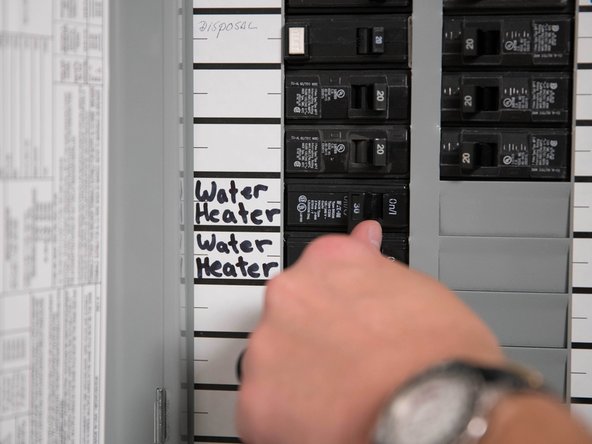
Turn the power to the water heater OFF at the circuit breaker (or remove fuses).
-
-
-
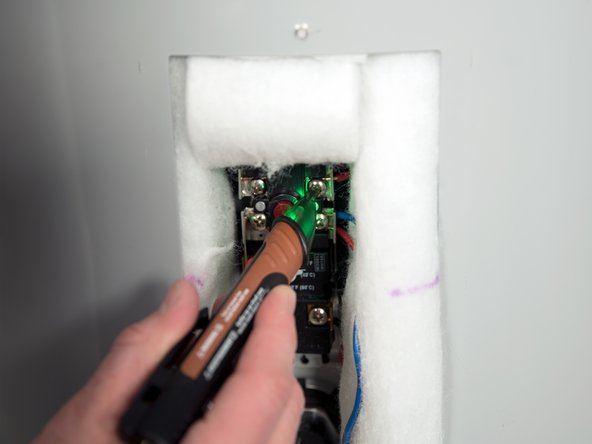
Using a multimeter set to AC volts, check for power on the two screws of the upper thermostat to ensure power is off.
-
WARNING! Working on an energized circuit can result in severe injury or death from electrical shock. Check wires with a volt meter or circuit tester to make sure power is off.
-
-
-
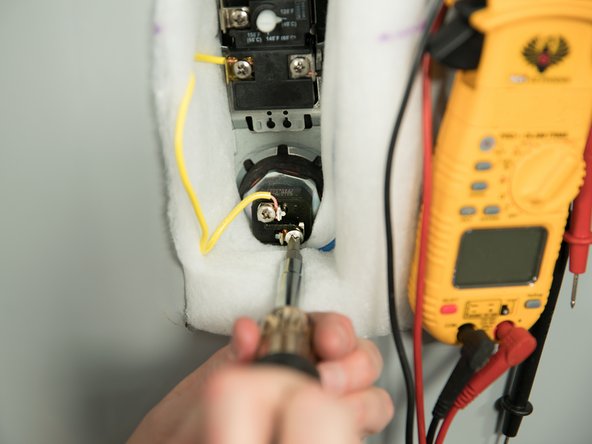
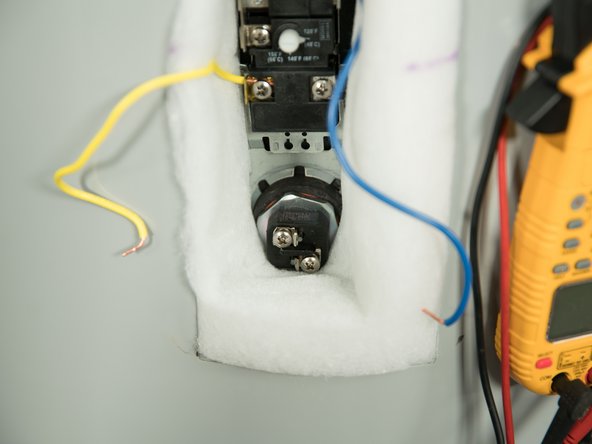
Remove the two power wires from the upper heating element.
-
-
-
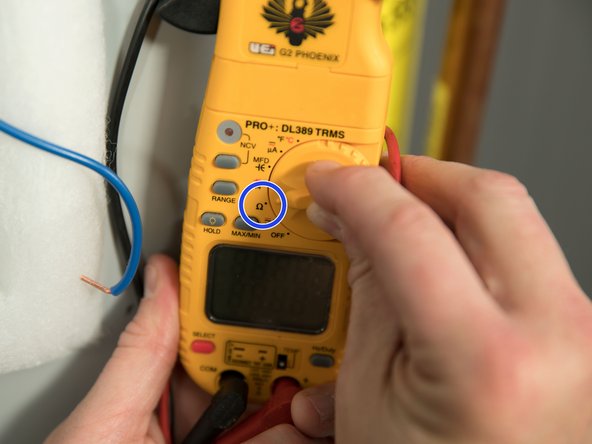
Set the multimeter to read resistance (200 Ohm range or lower, depending on the type of meter you have).
-
-
-
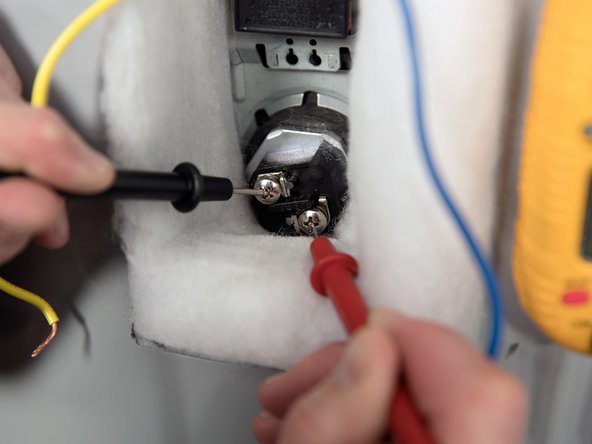
Check the resistance of the upper heating element using a multimeter. Measure the resistance between the two screw terminals on the upper heating element.
-
A good element will have a resistance between 5 and 25 Ohms.
-
Select below whether the element was in or out of range.
-
On a new water heater, a burned out upper heating element is almost always caused by turning the power on before the tank was completely full of water (dry fire).
-
If the resistance is outside this range, you will need to replace the bad element using an element wrench or 1 1/2" deep well socket .
-





Team
